System dossier01 / 06
01
Actuators & sensors
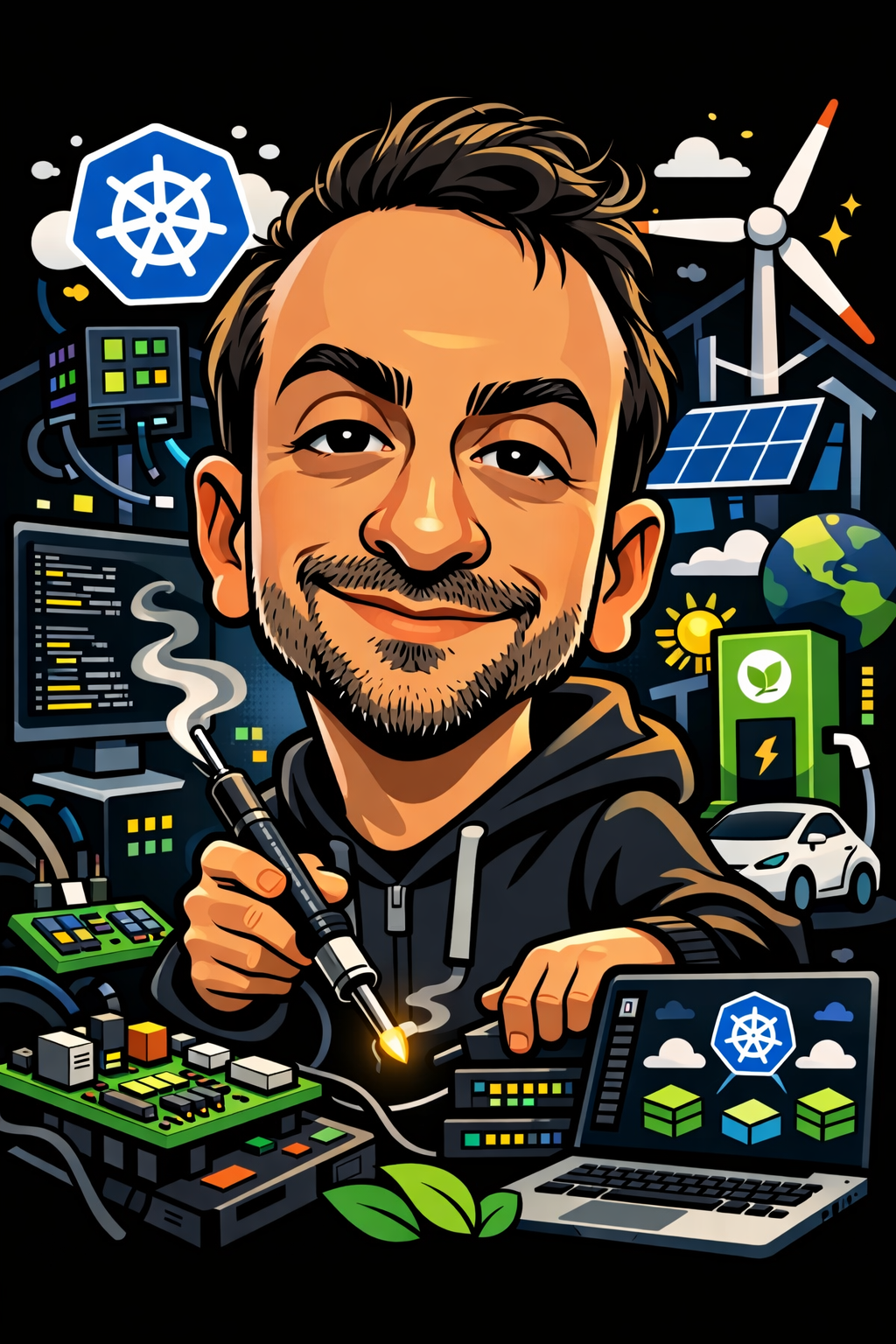
ANALOG · DIGITAL · PWMHi, I’m Luigi
I turn complex electronic requirements into systems that can be built, tested and trusted.
My work connects hardware design, validation and production engineering with software and cloud-native tooling.
02 / Expertise
My work sits where reliability, compliance and scale meet. I translate requirements into testable systems, find failure modes early, and build the tooling that makes engineering repeatable.
Test strategy and execution for electronic products operating under real-world electrical, thermal, EMC and vibration stress.
Digital, analog and power electronics across requirements, schematics, PCB, cabling and component engineering.
Industrialization and scalable production testing, from flying probe and inline inspection to end-of-line benches.
Practical infrastructure and software skills used to automate workflows and build observable, resilient services.
Connecting stakeholder needs, requirements, interfaces, verification evidence and lifecycle constraints.
Exploring orchestration for sensor networks, autonomous edge computing and connected industrial environments.
03 / Testing & validation
Hands-on verification across environmental stress, electromagnetic compatibility, product function, regulatory compliance and production readiness—from qualification planning through test execution, analysis and evidence.
Environmental verification under combined temperature extremes and vacuum conditions for aerospace electronic systems.
Electromagnetic compatibility assessment covering immunity, emissions and system behavior in representative electrical environments.
Mechanical qualification under vibration profiles to expose structural, interconnect and assembly weaknesses.
Requirement-based verification of product functions, interfaces, operating modes and expected system responses.
Compliance-oriented testing and technical evidence supporting product conformity for the European market.
Production validation through end-of-line, in-line, AOI and flying-probe methods built for repeatability at scale.
Lifecycle and stress analysis used to identify degradation, investigate failures and demonstrate long-term robustness.
04 / Selected experience
Military-grade electronic systems. Designing cabling and schematics, testing RF systems, troubleshooting hardware, and building Node.js tools for engineering processes.
MAHLE Electronics · Paterna, Spain
Mass-production power electronics for automotive powertrains. Led technical activities across testing and production while supporting engineering change management. Hands-on scope included end-of-line testing, automatic optical inspection, in-line tests, flying probe, durability validation and production tooling.
Validation ownership. Leading hardware verification strategy, environmental testing and evidence for demanding power-management products.
Eaton · Prague, Czech Republic
From plan to proof. Executing electrical, thermal, EMC and durability validation while improving test methods and reporting.
Thales Alenia Space · Turin, Italy
Space-grade verification. Testing complex electronic systems where traceability, configuration control and reliability are non-negotiable.
Electronic design for space. Contributing to schematics, component selection, prototyping and verification for compact aerospace systems.
Business development
Through international startup programs and hands-on work on YesBat, I developed practical business-development knowledge—from customer discovery and market analysis to business-model design, go-to-market planning and investor communication.
Working as a YesBat co-founder gave me the opportunity to apply structured venture-building methods with mentors and industry experts. Through BGI, EIT Jumpstarter and 28DIGITAL Mentor Me, I learned how to test commercial assumptions, identify valuable customer problems, evaluate markets, design a sustainable business model and translate a technical solution into a credible venture strategy.
Business-development knowledge acquired
Learned how to structure a compelling pitch, create a clear and persuasive deck, and communicate the opportunity effectively to mentors, partners and investors.
Learned how to identify customer segments, conduct discovery, distinguish assumptions from evidence and evaluate whether a technical solution addresses a sufficiently important market need.
Developed practical knowledge of value propositions, competitive positioning, acquisition channels, early adopters and effective market-entry strategies through the BGI program.
Learned through EIT Jumpstarter and Mentor Me how to build a coherent business plan, define suitable revenue models and connect technical milestones with commercial objectives.
05 / Education & training

Open each record for the original program details, modules, status, official curriculum and certificate evidence.
All certificates ↗Startup mentoring · venture creation · sustainable innovation
These programs strengthened my approach to business development, helping me turn early-stage ideas into stronger venture proposals. Through pitch development and market validation, I learned to understand customer needs and shape a go-to-market strategy supported by a practical business plan. I also explored public fundraising and how to prepare a project for funding opportunities.
Mentor Me supports early-stage digital and deep-tech startups that already have a prototype or MVP. Its online format combines topic-based mentoring, interactive workshops, masterclasses and on-demand advice from founders and industry experts.
The program focuses on team dynamics, product–market fit, funding readiness, and sales and marketing. Founders work on their investment story and pitch deck while refining their roadmap, customer positioning and approach to growth.
EIT Jumpstarter is a seven-month European pre-acceleration program for turning an early-stage innovation into a viable venture. It brings together sector-specific expertise, individual coaching, training and connections to EIT innovation communities.
The program develops the case for an idea by examining the customer problem, the proposed solution, the market opportunity, implementation risks and the team behind it. Its thematic areas include energy, healthcare, food, raw materials and urban mobility.
Mentors from Invento Capital Partners: Klara Šabić, Natali Bernatović and Nenad Buljan.
Led by BGI with EIT Urban Mobility, this venture-building program helps early-stage teams move from an urban mobility concept toward a validated product and a company. It combines a startup bootcamp with individual mentoring and a final Demo Day.
Participants work on the value proposition, target customers, business model and go-to-market plan, then develop an investor-ready MVP and present their progress to industry experts and potential investors. Focus areas include urban logistics, public transport, electrification and mobility data.
Program references: Jan Mrkous, project manager of the program, and Pedro Coutinho, mentor during go-to-market strategy development.
This three-month program from Miticoro Foundation and Politecnico di Torino combined clean-energy foundations with research, innovation and an applied team project. Technical modules explored renewable energy, energy storage and smart grids; the innovation work covered problem framing, structured ideation, user validation and pitch development.
Final project: Utopic Network — a Blockchain Edge-of-Things concept for the Internet of Energy. The case study brought together edge orchestration and blockchain to explore secure, low-latency energy operations.
This 35-hour training program in Naples connected strategic project design with EU funding frameworks, including NextGenerationEU, Cohesion Policy and Horizon Europe. It covered project and grant management methods such as PM², the Logical Framework Approach, RACI, SWOT, stakeholder mapping and SMART indicators.
In a team exercise, participants developed a simulated EU-funded proposal from the initial concept through its budget and evaluation. The course also addressed digital transformation, environmental sustainability and inclusive governance as themes for public-interest projects.
The Linux Foundation · Current
A security path covering Linux administration, Kubernetes platform security, DevSecOps pipelines, infrastructure protection and policy-as-code. Every module now opens independently.
Administration across Debian/Ubuntu and Red Hat families, Git collaboration, accounts, permissions, packages, processes, storage, kernels, networking, firewalls, systemd, backup and security.
Professional Linux system administration and, with experience and study, the LFCS exam.
Filesystem Layout · Users and Groups · Permissions · Package Managers · Git · Processes and Monitoring · Containers · Filesystems and LVM · Kernel and Devices · Networking and LDAP · Firewalls · systemd · Backup · Security Modules · System Rescue
Production Kubernetes installation, configuration, architecture, workloads, services, storage, scheduling, security, troubleshooting and high availability.
Operating containerized infrastructure and, with practical experience, the CKA exam.
Securing container applications and Kubernetes platforms across build, deployment and runtime, including supply-chain security, cluster hardening, monitoring and security-event logging.
Cloud-security responsibilities and, with experience and study, the Certified Kubernetes Security Specialist (CKS) exam.
Adding SCA, SAST, DAST, image scanning, Dockerfile security, vulnerability management, IaC compliance, logging and detection to a cloud-native continuous-delivery pipeline using open-source tooling.
Infrastructure threat modeling, risk reduction, hardening strategies, security tooling and operational practices across modern environments.
Installing Kyverno; writing, enforcing, mutating and testing policies; monitoring and reporting; securing Kyverno; integration, extensibility and multi-cluster policy management.
Policy Overview · Installation · Writing Policies · Enforcement · Mutation · Validation and Testing · Troubleshooting · Reporting · Security · Integration · Multi-cluster Management
The Linux Foundation · In progress
Linux systems administration and open-source operations, with supporting foundations in cloud infrastructure, GitOps, DevOps and SRE.
Enterprise Linux administration: users, packages, processes, storage, kernels, networking, services, backup, security and recovery.
Open-source project structure, communities, contribution workflows, licensing and collaborative development fundamentals.
Git as the declarative source of truth, automated reconciliation, delivery workflows and operational GitOps patterns.
IaaS, PaaS, containers, orchestration, microservices, software-defined networking and storage, CI/CD, monitoring, service mesh, IoT and serverless architecture.
Virtualization · IaaS and PaaS · Containers · Orchestration · Microservices · SDN and Storage · DevOps and CI/CD · Configuration and Release Tools · Logging and Monitoring · Service Mesh · IoT · Serverless · Tracing
DevOps culture, cloud, containers, Infrastructure as Code, CI/CD, observability and SRE practices for reliable software delivery.
Introduction to DevOps and SRE · Cloud · Containers · Infrastructure as Code · Continuous Delivery · Observability · Site Reliability Engineering
The Linux Foundation · 06/2025—03/2026
A six-course cloud-native engineering program covering the container lifecycle, orchestration, service communication, monitoring, packaging and logging. Open a module below for its full record.
Developers, QA, operations and DevOps professionals who need a working foundation in containers.
Container and image operations across runtimes; container networking and storage; multi-container applications; Docker and Docker APIs.
Bundling applications with their dependencies and deploying to bare metal, VMs or cloud platforms, with a foundation for Docker Swarm and Kubernetes.
1. Introduction · 2. Virtualization Fundamentals · 3. Virtualization Mechanisms · 4. Container Standards and Runtimes · 5. Image Operations · 6. Container Operations · 7. Building Images · 8. Networking · 9. Storage · 10. Runtime and Container Security
IT administrators and aspiring cloud engineers who want to manage containerized application infrastructure.
Installing and configuring a production-grade Kubernetes cluster, networking, upgrades, services, pods, Deployments and ReplicaSets.
Independent Kubernetes administration and, with practical experience, the Certified Kubernetes Administrator (CKA) exam.
Introduction · Kubernetes Basics · Installation · Architecture · APIs and Access · API Objects · Deployments · Helm and Kustomize · Volumes · Services · Ingress · Scheduling · Troubleshooting · CRDs · Security · High Availability · Exam Review
Modern cloud-native traffic management: microservice resilience, sidecar data planes, control planes, ingress, observability and mTLS using Envoy, Linkerd, Istio, Consul and SMI.
DevOps engineers, site reliability engineers and platform engineers adopting microservice architectures.
Distributed-system challenges, resilience strategies, service-mesh architecture, data plane versus control plane, and the evolution of ingress.
Cloud Native Apps · Resilience for Distributed Systems · Data and Control Planes · Service Mesh Fundamentals · Standards · Debugging and Mitigating Failures
Cloud-native observability covering Prometheus architecture, time-series data, PromQL, exporters, Kubernetes discovery, Alertmanager, high availability, remote storage and Thanos.
DevOps engineers, SREs and system administrators building production observability skills.
Monitoring real systems at scale, creating dashboards and alerts, and the Prometheus Certified Associate exam.
Observability · Prometheus Setup · Querying · Dashboards · Host and Container Metrics · Instrumentation · Exporters · Relabeling · Discovery · Blackbox Monitoring · Alerting · HA · Rules · Scaling · Local and Remote Storage · Kubernetes
Helm architecture, production-ready chart design, repeatable releases, upgrades, rollbacks, repositories, dependencies and integration with CI/CD and GitOps workflows.
System administrators, DevOps engineers, SREs and software professionals operating containerized Kubernetes workloads.
Installing Helm, creating charts and managing an application’s full lifecycle safely across environments.
Helm Basics · Setup and Initial Usage · Helm Charts · Application Lifecycle · Chart Repositories and Advanced Topics
Production cloud-native logging with Fluentd and Fluent Bit: collecting, parsing, filtering, enriching, aggregating and forwarding logs through a unified logging layer.
System administrators and developers who need to operate cloud-native logging tools.
Native and container installations, log forwarding, sophisticated aggregation, pipeline design, monitoring, optimization, debugging and security.
Fluent Ecosystem · Inputs and Outputs · Filtering and Pipelines · Parsing and Formatting · Multi-instance Deployments · Monitoring · Optimization · Security · Debugging and Tuning · Fluent Bit
ProfessionAI · 12/2025—01/2026
Practical foundations in Python and AI, followed by workshops on LLM fine-tuning, model serving through REST APIs, RAG and agentic applications.
Nuclio Digital School · 16 hours
Agile principles and team delivery practices for managing iterative digital projects.
The Linux Foundation · 05—06/2025 · ≈112 self-paced hours
A four-course foundation in cloud environments, CI/CD automation, Kubernetes and the DevOps/SRE mindset.
A practical foundation in Jenkins as a CI/CD orchestration platform connecting source control, builds, tests and deployment targets.
Teams evaluating Jenkins and engineers who need to establish an automated software-delivery workflow.
Installation, dashboard operation, plugins, freestyle and pipeline projects, security, third-party integrations and distributed builds with agents.
Operating and scaling Jenkins and progressing toward advanced pipeline optimization and enterprise CI/CD.
CI/CD Overview · Installation · Dashboard · Plugins · Security · Projects · Freestyle Projects · Pipeline Projects · Distributed Builds · Next Steps
A structured introduction to Kubernetes architecture and cloud-native orchestration, with hands-on deployment and access through Minikube.
Teams and individuals beginning Kubernetes adoption; Linux administration knowledge is useful but not required.
Origins, architecture, control-plane concepts, Pods, Services, volumes, ConfigMaps, Secrets, authentication, authorization, networking, storage and ingress.
Testing cloud-native patterns and moving into advanced Kubernetes and platform-engineering topics.
Monolith to Microservices · Orchestration · Kubernetes Architecture · Installation · Minikube · Building Blocks · Authentication and Authorization · Services · Applications · Volumes · ConfigMaps and Secrets · Ingress · Advanced Topics · Community
A broad map of modern cloud architecture: service models, virtualization, containers, orchestration, microservices, networking, storage, observability, service mesh, IoT and serverless.
System administrators, developers and architects with limited prior cloud experience.
IaaS, PaaS and CaaS; Docker operations; software-defined networking and storage; CI/CD; configuration management; monitoring and distributed tracing.
Evaluating open-source cloud technologies and collaborating effectively across development and operations.
Virtualization · IaaS · PaaS · Containers · Orchestration · Unikernels · Microservices · SDN · Software-defined Storage · DevOps and CI/CD · Configuration and Release Tools · Logging and Monitoring · Service Mesh · IoT · Serverless · Distributed Tracing
Foundations, practices and cultural changes behind modern delivery and reliable operations, including cloud, containers, Infrastructure as Code, observability and SRE.
Managers leading transformation and engineers beginning a DevOps or SRE path.
How cloud and Kubernetes reshape delivery, why Infrastructure as Code matters, and how CI/CD and observability support reliable systems.
Deploying and operating software with greater confidence, agility and reliability.
DevOps and SRE · Cloud · Containers · Infrastructure as Code · CI/CD · Observability · Site Reliability Engineering
University of Helsinki · 3 ECTS
Docker fundamentals, containerizing existing applications, Compose-based multi-container systems, deployment pipelines and orchestration concepts.
Nuclio Digital School · 05/2024—01/2025
Frontend and backend web engineering with JavaScript, React, Node.js, Express, databases, testing, Git workflows, deployment and agile team delivery.
Final project: random user group creation application using Node.js, Express and Supertest.
Politecnico di Torino · 120 CFU
Advanced training in the design, modeling and validation of complex electronic systems: integrated digital systems, analog and power electronics, low-power architectures, high-speed devices, embedded operating systems, sensors, radar and hardware–software co-design.
Designed a DC/DC converter for photovoltaic and wind inputs using a multi-input boost architecture with variable-step perturb-and-observe maximum-power-point tracking. iXem Laboratory, DET.
Developed a MATLAB tool to exhaustively test PLAs and calculate static/dynamic power, output delay and silicon area; later integrated into the ToPoliNano cross-platform EDA software.
Designed an architecture capable of executing the FFT butterfly algorithm, from Control Flow Diagram to VHDL testbench using Quartus II, MATLAB and ModelSim.
Politecnico di Torino
Foundations in mathematics, physics, analog and digital electronics, control systems, signal processing and electromagnetic fields, supported by laboratory work and applied engineering projects.
06 / Now building
Ongoing personal products where I apply engineering discipline to software, infrastructure and real operational problems.
07 / Links & evidence
Every record pairs the provider’s official curriculum with my corresponding GitHub certificate, notes or project evidence.
08 / Contact
Open to engineering conversations across electronic systems, V&V, industrial tooling and cloud-native infrastructure.